Peru · January 2027
Huachuma in the Sacred Valley
Education, preservation, and community. Nine people, three ceremonies, and six months around them. You are taught for ten days, you sit on the mountain, and you plant at the Sanctuary. From $3,800.
Ten days
In Pisac, the Sacred Valley
Nine people
One group, January 2027
Three ceremonies
Two on the mountain, one by fire
From $3,800
$500 holds your place
What this is
Ten days, held inside six months
Ten days in the Sacred Valley of Peru, in the village of Pisac, held inside a six month container. Four weekly calls before you travel. Ten nights in the valley, with three ceremonies in them. Four integration sessions after you are home.
It is closer to a course than to anything else, and it is held on a mountain rather than in a room. You are taught, you sit in ceremony, and you put plants in the ground at a conservation project you will by then understand.
Nine people. One group, once, in January 2027.
The medicine
The plant
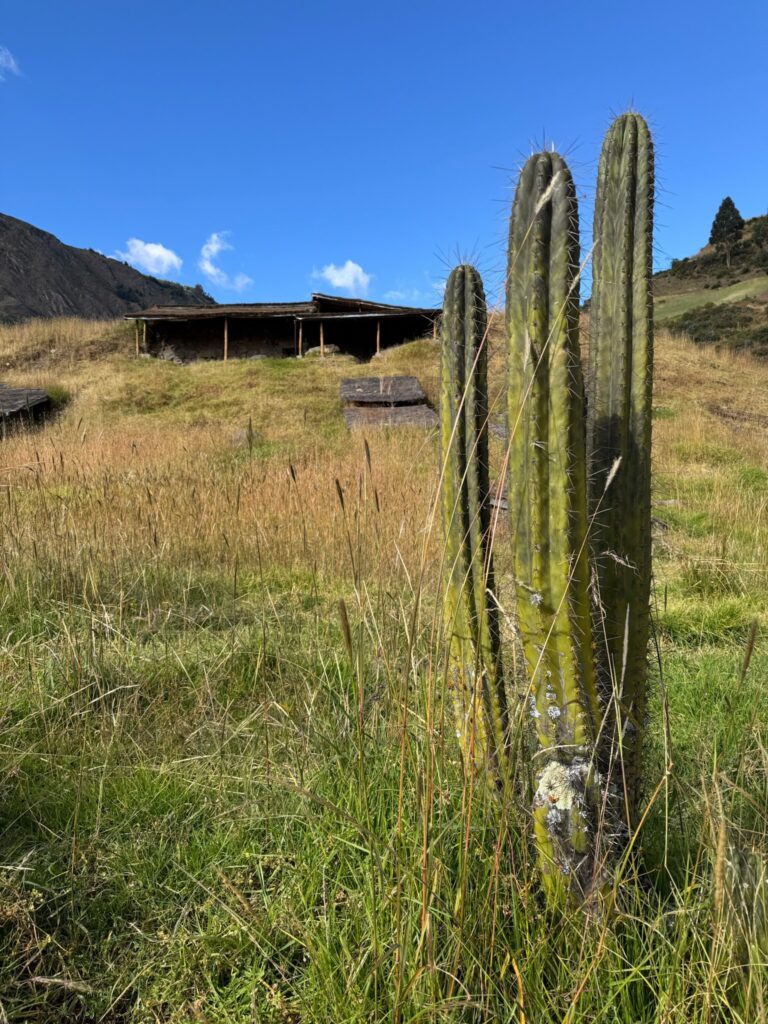
Huachuma is a columnar cactus from the Andes, Echinopsis pachanoi, which older books call Trichocereus pachanoi. It has been used in this part of the world for around three thousand years, which makes it one of the longest continuous relationships between a people and a plant anywhere on earth.
The Quechua name is usually read as waqcha uma, roughly “without a head”. It describes what the plant does: it quiets the analytical mind and moves your attention from the head to the heart. Everything else follows from that.
It is also called San Pedro, after Saint Peter, who holds the keys. That name comes from the period when the Church was trying to end the practice, which tells you something about how the practice survived.
The teaching
What you will learn
Four subjects, taught properly rather than mentioned. Sessions run on the days between ceremonies, when there is room to think.
History
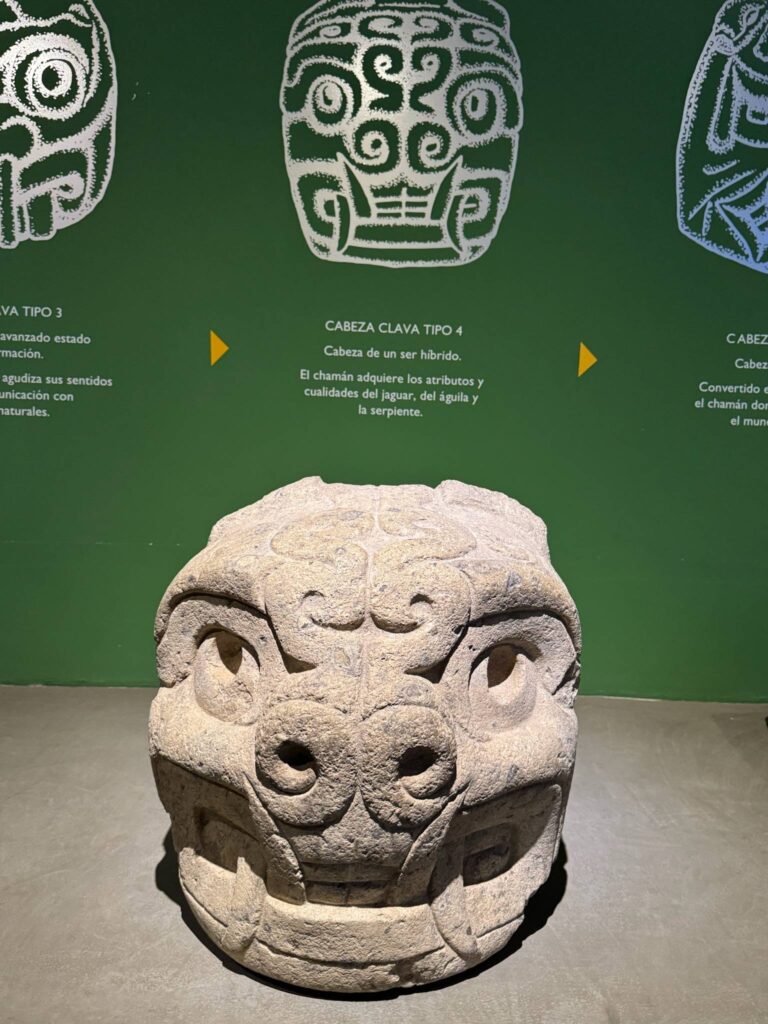
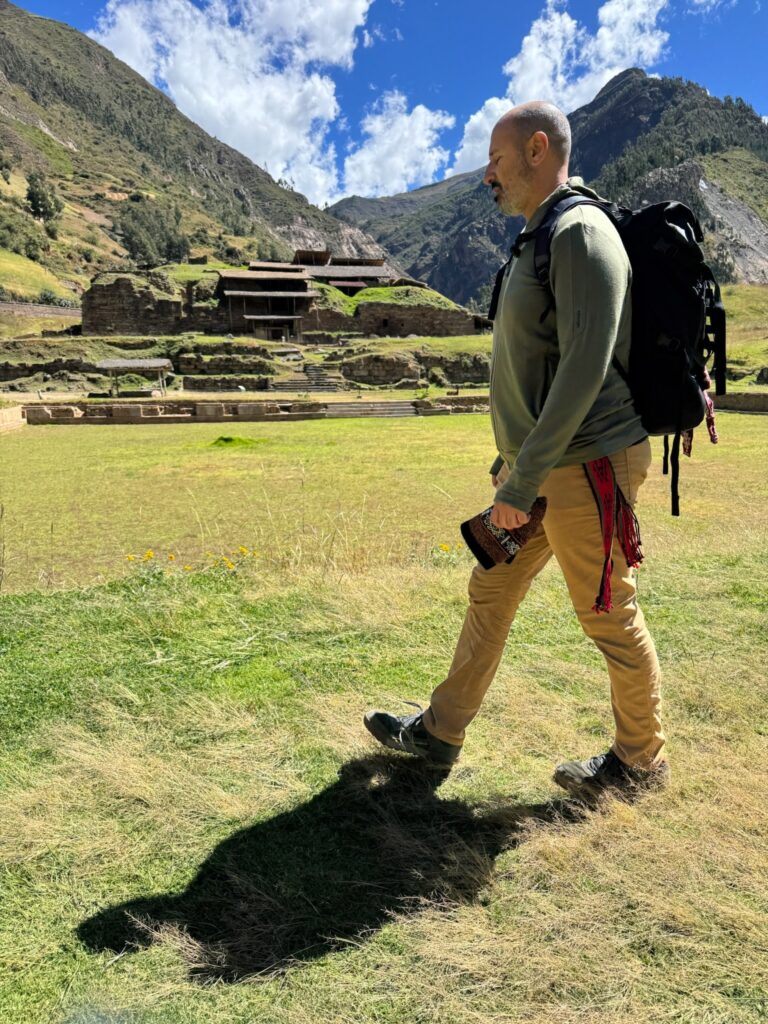
- Chavin de Huantar, roughly 900 to 200 BCE. A temple complex in the northern highlands with the plant carved into its stonework, held by a figure at the centre of the site. The record starts with the plant already at the centre of religious life.
- 1532, and what followed. The Spanish arrival, Cajamarca, and the seizure of Atahualpa. Then three centuries in which the medicine was recorded as heresy. The Peruvian Inquisition ended in 1820. The practice was still there in 1820.
- How it survived. Some priests tried the medicine themselves and came back with something they wanted to reconcile with their own faith. The renaming to San Pedro belongs to that period. The tradition took on the vocabulary of the people trying to end it and continued underneath it.
Science
- What mescaline is and what it does. The pharmacology, honestly, including the parts that are well established and the parts that are still argument.
- Why this plant increases sensation. Most substances people reach for turn the volume down. This one turns it up, and that is the point of it.
- How to tell knowledge from repetition. A great deal of what circulates about this medicine is one person’s paraphrase of another person’s. You leave able to read a claim about huachuma and work out whether anybody ever checked it.
Cultivation
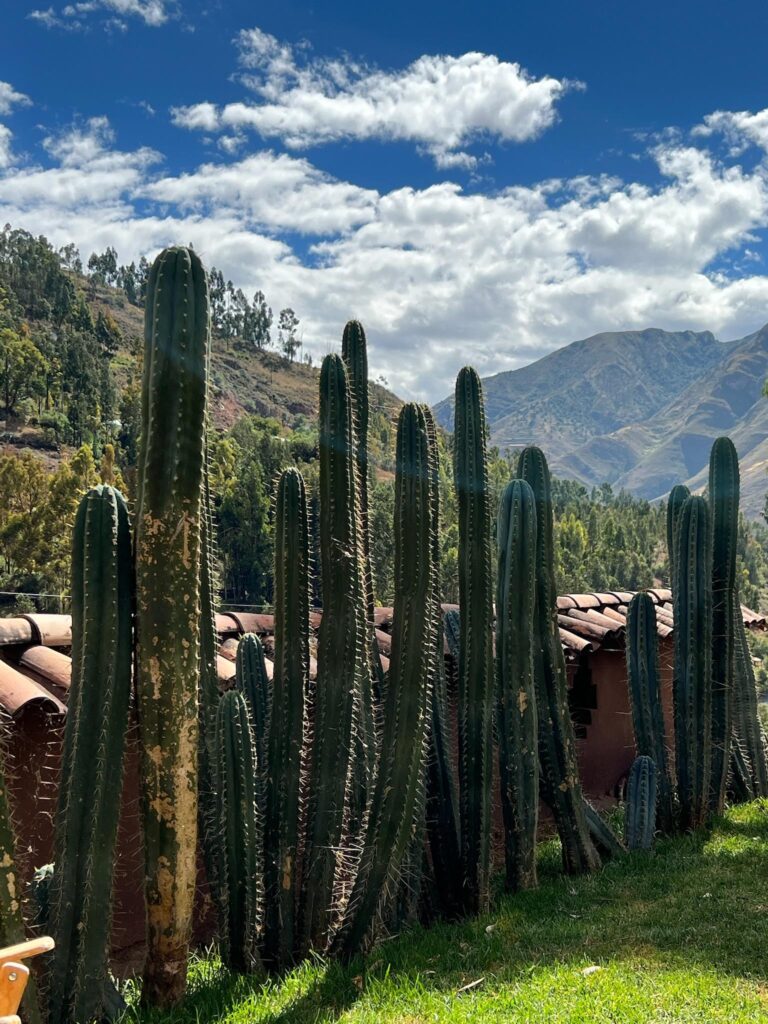
- How it grows. Slowly from seed, readily from a cutting, and differently depending on where in the Andes it sits. You will see several varieties growing in one place and learn to tell them apart.
- The spines. Too small to defend the plant against anything. One reading is that they catch dew and feed water down to the skin. A cactus that gave up its armour and learned to drink from the air is a fair description of what the medicine asks of a person.
- Why it is at risk. Demand has grown quickly, wild plants are cut faster than they regrow, and a plant that takes years to reach a usable size cannot absorb that. This is the problem the Foundation works on.
Ceremonial use
- The shape of a ceremony day. Where the circle sits, why it sits close enough to touch, and how the day moves between altars from first light to the end.
- The tools. A stick, a rattle and a feather are passed around the circle. They are an invitation to sing. Nobody has to sing, and passing them on is a complete answer.
- The direction of movement. Everything moves clockwise. You pass in front of people rather than behind them. Small rules, and they keep nine people moving as one body without anybody having to negotiate.
- The silence. Ceremonies are held in noble silence, which is a commitment to stay inside your own experience. You are taught what to do with the urge to speak, and what to say to someone who speaks to you.
What you take home.
You leave able to explain this plant accurately to whoever asks, and able to recognise what is happening in a ceremony while you are inside it. That understanding is the whole of what we teach for. Facilitator training is a separate discipline and a different course.
The container
The six months
- Four weekly calls before you travel. History, the science, ceremony etiquette and preparation. This is also where the nine of you meet each other, so that nobody arrives in Peru among strangers.
- Ten days in the Sacred Valley. The middle of it, and the part below.
- Four integration sessions after you land. Spaced across the months that follow, because the useful questions arrive later than the first week.
The ten days are the middle of this rather than the whole of it, and the people who get the most out of it treat the flight home as the halfway mark.
The shape of it
The ten days
A shape rather than a schedule, because weather and a group of nine both have opinions.
- Arrival and rest. Cusco is high and Pisac sits lower, which is why we start where we start. The first days are for altitude, minerals and sleep.
- Opening circle. The group agreements, out loud, together.
- Three ceremonies. Two full days on the mountain, and one all night fire ceremony.
- Days between. Open on purpose. Rest, walk, write, talk, or do nothing at all. We keep this space clear because it is where integration happens.
- The Sanctuary. A visit, the teaching that goes with it, and planting.
- Closing and departure.
On the mountain
The three ceremonies
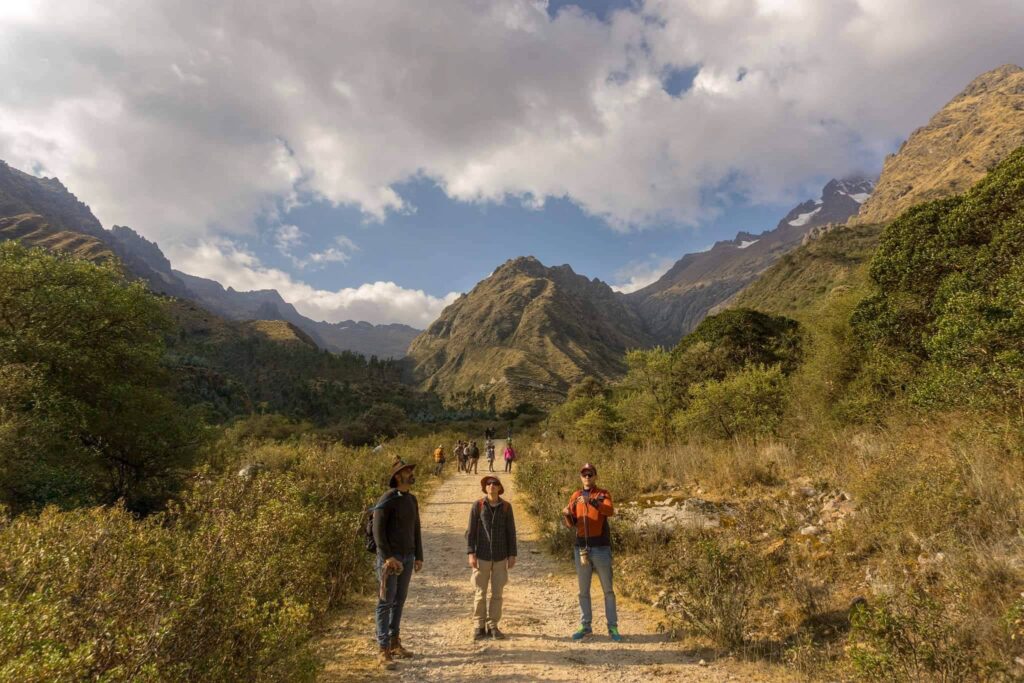
- Two mountain ceremonies. Full days, starting early, held outdoors above the valley. You walk in, and the walk is part of it.
- One fire ceremony, all night. Around a fire, inside a temple, from dark until morning. It is incredible and it is challenging, and it is worth doing for anyone who wants to connect more deeply with huachuma.
All three are guided by someone who has been holding these ceremonies for more than twenty years, and nine people is the largest group he works with.
Fit
Who this is for, and what it asks
Who this is for
- People who want to understand this medicine, not only to take it.
- People who read the Foundation’s work and want to do something with their hands.
- People who have sat in ceremony before and want the context they were never given.
- People who have never sat in one and would rather start somewhere that explains itself.
What it asks of you
- A medication list we can clear together. Some medications, antidepressants among them, do not combine safely with this medicine. That is a hard limit set by chemistry. We go through it with you one to one, before anybody pays anything.
- The stamina for a mountain day. Several hours uphill, above nine thousand feet, on two of the ten days.
- Steady ground at home. Support to return to, and enough stability now that ten days in the Andes is the right thing this year.
- An appetite for the work. You will be taught, you will walk, and you will put plants in the ground. Peru rewards a quieter holiday too, and we are glad to point you at one.
Pisac
Where you stay
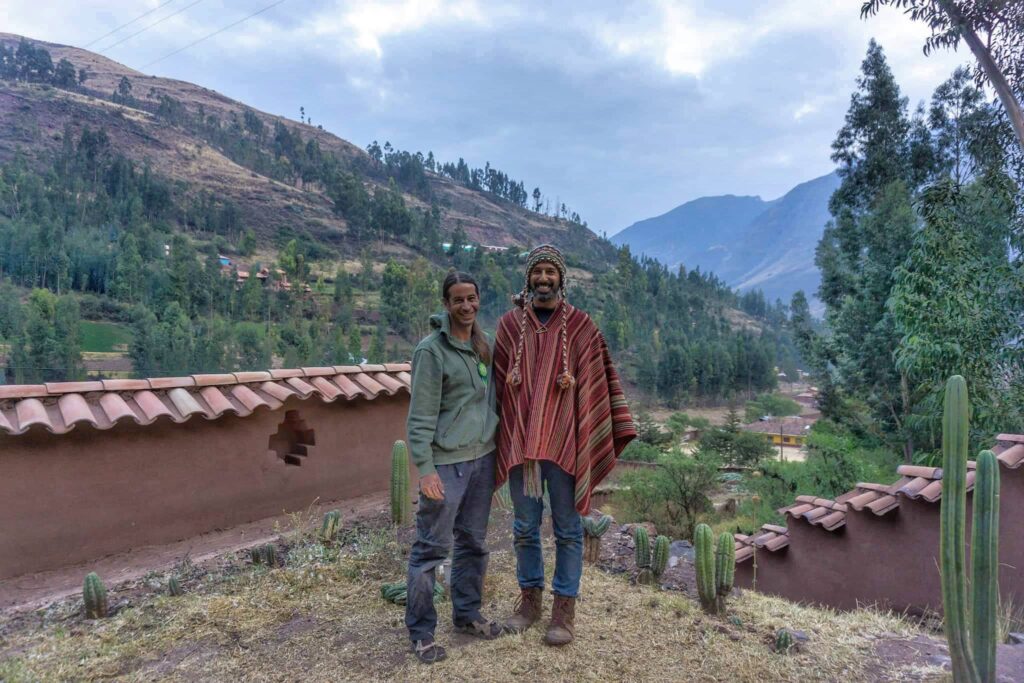
Martina Wasi, in Pisac, at the lower end of the Sacred Valley. Ten nights.
- Two meals a day. Breakfast and dinner, cooked from local ingredients and without seed oils. Lunches are your own, and Pisac is a good town to be hungry in.
- Evenings are for the group. Nothing is required.
- Four ways to sleep. A shared room, a private single, a bungalow, or a premium suite. Couples take the bungalow or the suite at the single room price.
The detail
What is included
In the price
- Ten nights accommodation in your chosen room
- Three ceremonies
- All teaching sessions
- Two group meals a day
- Ground transportation in the Sacred Valley
- The visit and the planting at the Huachuma Sanctuary
- Four weekly preparation calls before you travel
- Four integration sessions after you return
Arranged separately
- Airfare to Cusco
- Lunches
- Travel and medical insurance, which we require rather than recommend
- Personal shopping and anything you add yourself
The price
The price
| Shared room | $3,800 |
| Private single | $4,800 |
| Bungalow or premium suite | $5,200 |
| A couple sharing a bungalow or suite | $4,800 each |
- Paying in three parts. A $500 deposit holds your place, whichever room you choose. Half of the balance that is left after the deposit is due two months before departure, and the other half one month before. On a shared room that is $500, then $1,650, then $1,650.
- Paying in full takes $200 off. Settle the whole amount when you book and a shared room is $3,600 rather than $3,800, and so on down the table. Paying in full stands in lieu of the deposit, which is why it is the moment of booking that earns it. It is available whenever you book and it never expires.
Any profit returns to the Huachuma Foundation.
Applying
How to apply
You apply, we reply, we talk, and only then is there a deposit. In that order, every time.
The application asks about your health, your medications and what you are hoping for. One of us writes back, and then we get on the phone together. If that call ends with a different year suiting you better, it has done its job, and nobody has spent anything.
Questions
Questions
- Is this a retreat?
- People will call it that and we understand why. It is closer to a course held on a mountain. You are taught for ten days, you sit in three ceremonies, and you work on a conservation project with your hands. Come expecting to learn and to walk.
- Do I need experience with this medicine?
- No. The four preparation calls bring everybody to the same starting point, and nine people is small enough that every question gets an answer.
- How difficult is it physically?
- Expect several hours uphill above nine thousand feet on the mountain days, and one ceremony that runs through the night. Altitude affects everybody differently, which is why the first days are built around acclimatising.
- What are the dates?
- January 2027, and we post the exact days here as soon as they are set.
- Is it legal?
- Ceremonies are held in Peru, under Peruvian law, where this medicine is used traditionally. Nothing crosses a border. The full statement is on our legal page.
- What is the Huachuma Sanctuary?
- The Foundation’s conservation project: habitat and propagation for a plant that is being cut faster than it grows. You will plant there.
- Can I get a certificate or facilitator training?
- We teach for understanding rather than for facilitation. You leave able to explain this plant accurately and to recognise what is happening in a ceremony while you are in it. Training people to hold ceremonies is a separate discipline.
- What if I need to cancel?
- The terms are on our legal page, and we walk you through them on the phone before you pay anything.