


Getting there
From Cusco to Pisac
How you reach the house in Pisac, what we arrange, and what the Sacred Valley is like in June and July.
Flying In
You fly into Cusco’s airport, Alejandro Velasco Astete International, code CUZ, usually by way of Lima. You book your own flights to and from Cusco, and we help you coordinate them. Some airlines cap the checked bags you can take into Lima, at times at two even if you would pay for more, so check your airline’s rules for your dates before you pack.
Most travelers from the United States, Canada, the United Kingdom and the EU need no visa to visit Peru as tourists, and your passport needs to be valid for at least six months after you enter the country. Check the current rules for your own passport before you book flights. Keep a photocopy of your passport, and have the address of the house and your departure date ready for immigration.
The first day
Arriving in Pisac
On the first day a driver meets you at the airport and brings you to the house, and people on the same flight may share a driver. The drive down to Pisac takes about 45 minutes.
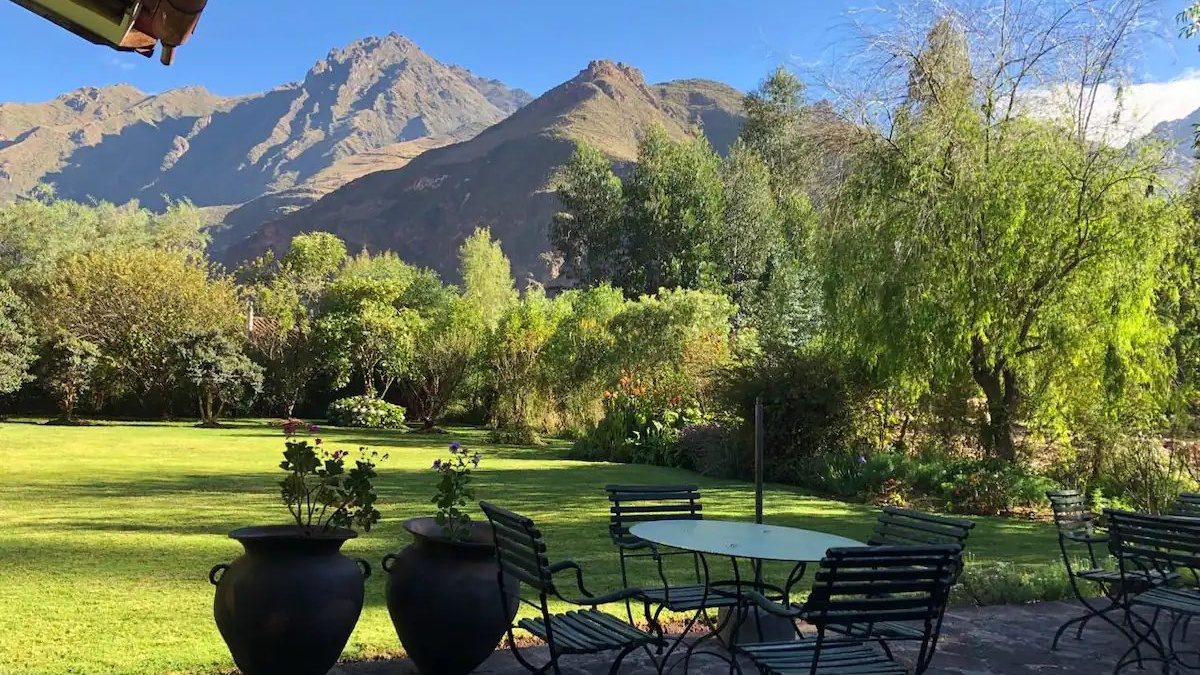
All ground transport is in the price, including the airport transfers at both ends and the ceremony days. We stay at Martina Wasi, a private Andean villa a ten minute walk from the center of Pisac. Our cook makes breakfast and dinner at the house each day, and lunch is on you, which is inexpensive in town.
We can arrange for you to arrive a day early or stay a day late, for a small extra cost.



Altitude
Cusco sits at about 11,150 feet, or 3,399 meters, and Pisac at about 9,750 feet, or 2,972 meters.
From the airport you come down into the valley, and Pisac sits lower than Cusco. The first ceremony comes after several easy days so your body can catch up, and there are coca leaves for tea at the house. There is an oxygen tank there too, though no one has ever needed it. If altitude has been hard on you before, tell us in the application.
June and July
Both retreats fall in the valley’s dry season. Days are often warm, with highs in the 60s, and nights are chilly, in the 40s and 50s. Higher up, where some ceremonies are held, it can be much colder, and rain is very rare.
Bring layers you can add and take off, and see what to bring for a ceremony day.
Pisac and the Sacred Valley
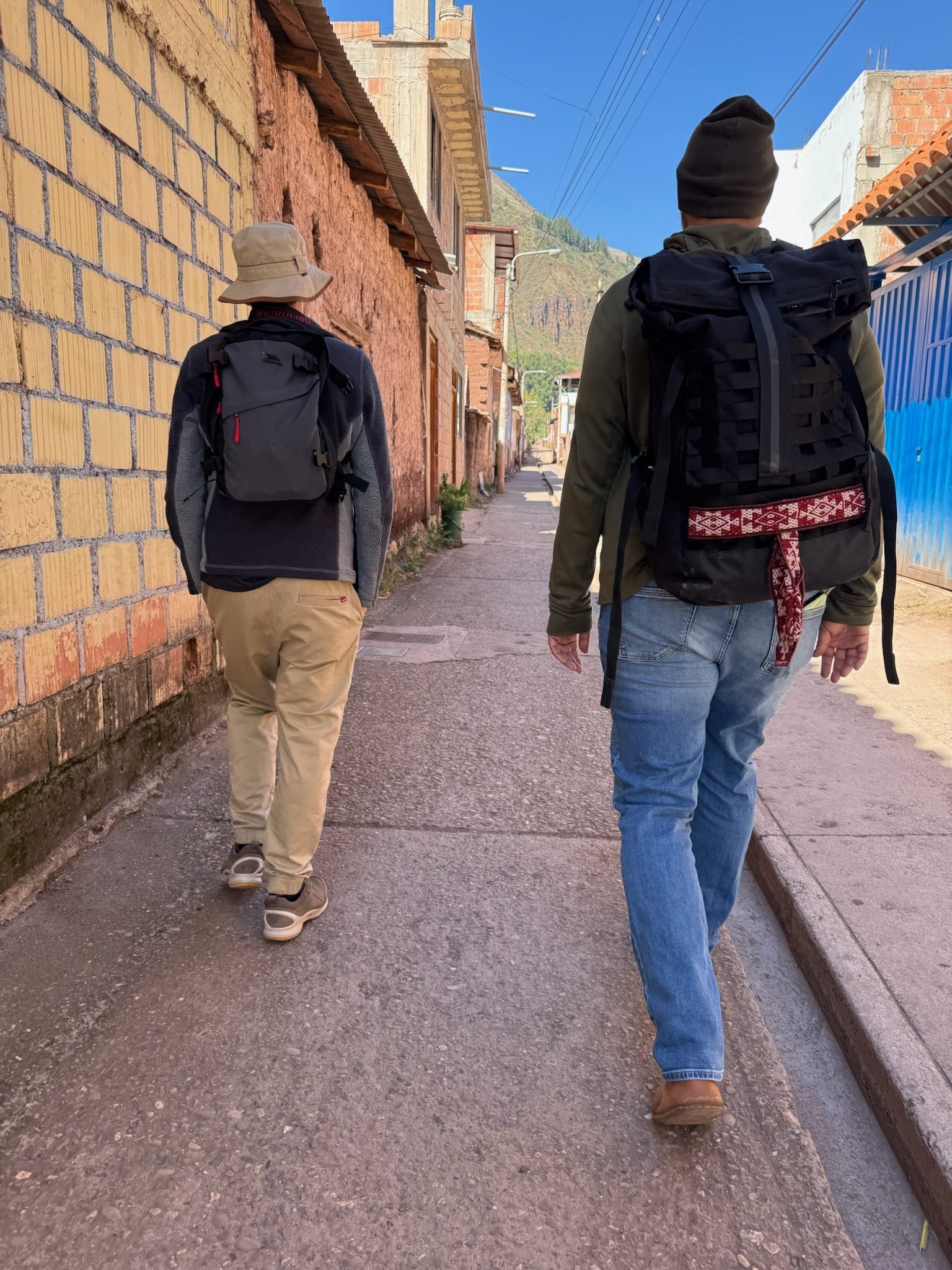
Pisac is a town of cobbled streets under granite peaks, at the lower end of the Sacred Valley. The farmers market runs most mornings with fresh produce, juice, and breakfast made in front of you. On Sundays the main square fills with textiles, carved flutes, and a lane of Andean herbs and incense. Above the town the old terraces and stonework are still standing, and the irrigation channels cut into them still carry water. The Vilcanota River runs below, on its way to the Amazon.
There are clinics in Pisac, a ten minute walk from the house, and larger hospitals in Cusco, about 45 minutes away by car.
Money, Phones and Power
Peru is mostly a cash economy, though many restaurants and shops in Pisac now take cards. Bring at least $300 in cash for spending, and tell your bank you are traveling. There are cash machines in town, with low withdrawal limits and high fees, and the money changers in Pisac have given better rates than the airports.
The house has Wi-Fi, as do many restaurants, and we keep in touch on WhatsApp whenever the group is apart, so have it on your phone. Peru runs on 220 volts, and most phone chargers handle that without a converter.
Staying On
Machu Picchu, Ausangate and the valley’s other sites are close by. If you want to stay on for them after the retreat, we can advise you and help with the arrangements.
What a ceremony day is like is set out in A Huachuma Ceremony Day, and the law in Is Huachuma Legal in Peru?
The retreats
Heart Path
It runs July 1 to 11, 2027, and is open to everyone.
Fire Path
It runs June 17 to 27, 2027, for experienced seekers.