

Peru’s law, source by source
Is Huachuma Legal in Peru?
Peru’s drug laws never name the cactus. They name mescaline, the alkaloid it carries. Here is what each source says, quoted.
Read against every source on . A record of what they say, not legal advice.

In five lines
The Short Answer
No Peruvian law or official list we found names the cactus, whether as Huachuma, San Pedro, Echinopsis pachanoi or Trichocereus pachanoi.
Mescaline is on the most restricted of Peru’s lists, and the Ministry of Health’s regulation prohibits its production, export, import, trade and use.
When Peru joined the United Nations treaty that controls mescaline, it reserved its position on San Pedro, because of the plant’s use in traditional rites.
Since 2022 the traditional knowledge and uses of San Pedro in the healing practice of northern Peru have been part of the nation’s cultural heritage.
We found no Peruvian court decision on San Pedro, and no law that says outright that taking part in a ceremony is legal, or that it is not.
Huachuma Works runs retreats, not a law practice, and what follows records the sources rather than advising you. If your plans turn on the law, ask someone licensed to practice law in Peru, and in the country you live in.



The treaty, and Peru’s lists
The Plant and the Molecule
Mescaline is in Schedule I of the United Nations Convention on Psychotropic Substances of 1971, the treaty most countries, Peru among them, use as the floor of their drug laws. The treaty schedules molecules, not plants.
In 2010 the International Narcotics Control Board, the body that watches over the treaty, wrote that no plants are controlled under it, and that brews made from them are not under international control either. It also asked governments to consider controlling such plants at home.
Peru’s own lists follow the treaty. Its drug law of 1978, Decreto Ley 22095, puts mescaline in List I B, and the Ministry of Health’s current catalog, dated November 2024, does the same. List I A also carries a general entry for “plants and plant extracts liable to misuse”, which names no plant. A regulation of 2001, Decreto Supremo 023-2001-SA, prohibits the production, manufacture, export, import, trade and use of everything on both lists.
“Neither the crown (fruit, mescal button) of the Peyote cactus nor the roots of the plant Mimosa hostilis nor Psilocybe mushrooms themselves are included in Schedule I, but only their respective active principles.”
The United Nations’ official Commentary on the 1971 Convention, 1976
So the cactus is named nowhere, and the alkaloid in it is named on the strictest list.

January 1980 and January 1981
Peru’s Note to the United Nations
Peru joined the 1971 treaty on January 28, 1980, with a reservation. Article 32 of the treaty lets a country where such plants grow wild, and where small, clearly determined groups use them in magical or religious rites, hold those plants outside the treaty’s rules on use, though never outside its rules on international trade.
A year later, on January 29, 1981, Peru told the Secretary General which plants it meant. There were two, Ayahuasca and San Pedro:
“a columnar cactus known as San Pedro, which grows in the desert coastal regions and in the Andean region and contains mescaline ... San Pedro is used in magical rites by indigenous medicine men or shamans.”
Peru’s clarification to the United Nations, January 29, 1981
The United Nations’ record shows no withdrawal of the reservation. A reservation sets what Peru owes under the treaty. It is not a Peruvian statute, and we found no decree that writes it into Peru’s own lists.
The Heritage Declaration of 2022
Peru’s Ministry of Culture published Resolución Viceministerial 000252-2022-VMPCIC/MC on November 17, 2022. It declares the traditional knowledge, wisdom and uses of the San Pedro cactus in the curanderismo of northern Peru to be Cultural Heritage of the Nation. It names seven regions:
Lambayeque, La Libertad, Piura, Tumbes, Cajamarca, Amazonas and Áncash.
Cusco and the Sacred Valley are not among them.
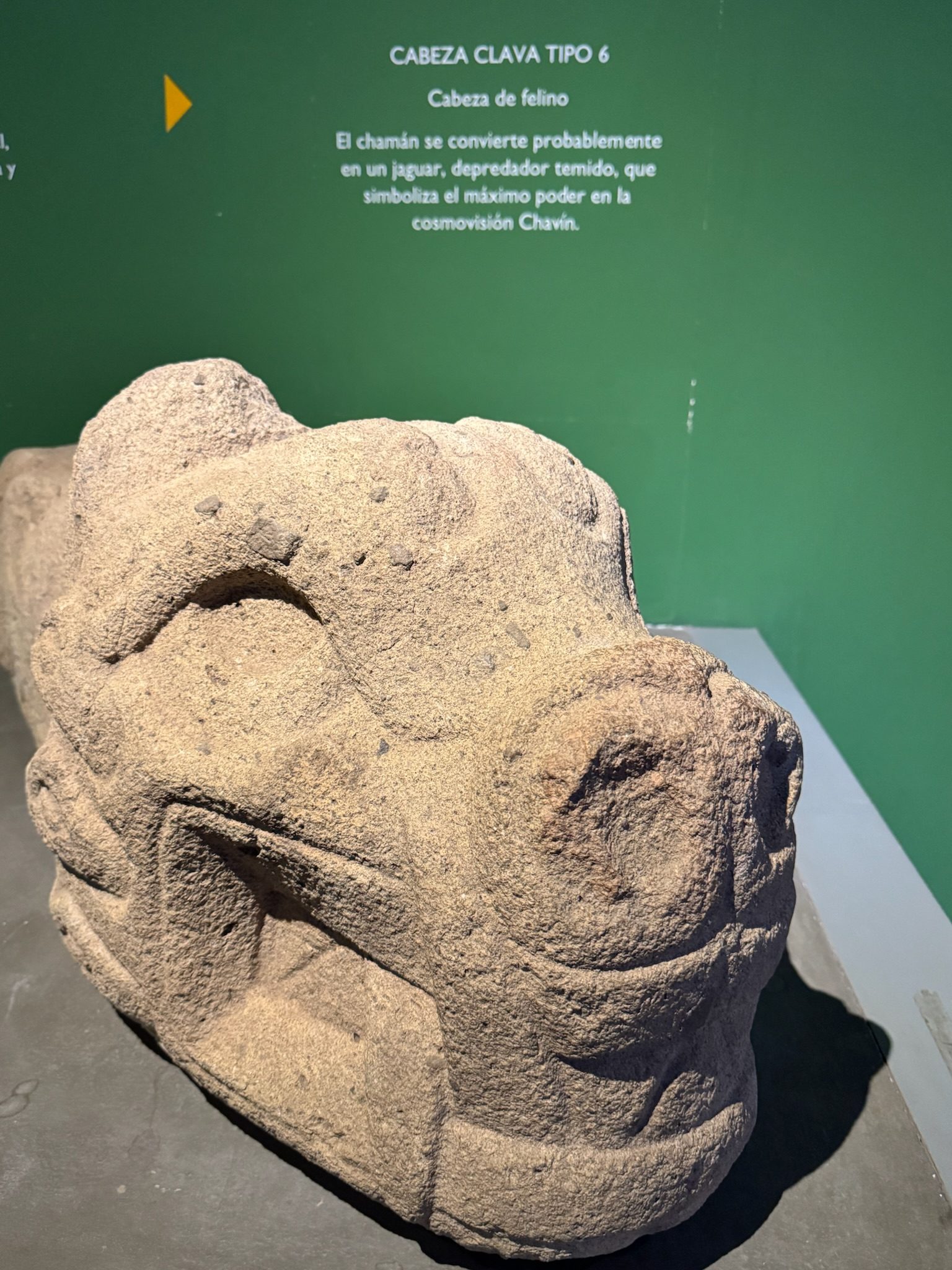
The declaration dates the oldest known images of the plant to the stone art of Chavín de Huántar and the pottery of the Cupisnique, in the first millennium before our era, and says its use is much older: remains of the plant found in the Guitarrero caves are dated to about 8,600 years ago.
It distinguishes that traditional practice from recreational use, and from use taken out of its own social and cultural setting. It is a heritage measure, made under Peru’s cultural heritage law, and it says nothing about drug law or about who may take part in a ceremony.
It is a separate instrument from Peru’s declaration of 2008 on Ayahuasca.
Leaving Peru, and arriving home
Crossing a Border
Never carry the cactus, or anything made from it, across a border. Four sources point the same way.
Every part of Echinopsis pachanoi, cuttings and dried stems included, falls under CITES, the treaty on trade in wild species, which lists all cacti in its Appendix II. In Peru the permits come from SERFOR, the national forest and wildlife service, and customs asks for one.
Peru’s reservation at the United Nations does not reach international trade.
Peru’s own regulation prohibits the export and import of mescaline, as it does its use.
Your own country’s law applies to you at home. In the United States, for one, mescaline is a Schedule I hallucinogen, along with any material that contains any quantity of it. Peyote is named there, and San Pedro is not.
How the retreat works
Every ceremony on our retreats takes place in Peru. No medicine is supplied, sold, shipped or administered outside Peru, and nothing crosses an international border in connection with the retreat.
Participants are responsible for their own compliance with the laws of their country of residence. The full terms are on our legal page.



Questions
Is San Pedro Legal in Peru?
No Peruvian law or official list we found names the cactus. Mescaline, which it contains, is on Peru’s most restricted list, and Peru reserved its position on San Pedro’s use in traditional rites when it joined the United Nations treaty in 1980. We found no court decision either way.
Is Mescaline Legal in Peru?
No. It is in List I B of Peru’s drug law, and the Ministry of Health’s regulation prohibits its production, export, import, trade and use.
Is San Pedro Part of Peru’s Cultural Heritage?
Its traditional knowledge and uses in the curanderismo of northern Peru are, since November 2022, under Resolución Viceministerial 000252-2022-VMPCIC/MC. The declaration names seven northern regions, and Cusco is not one of them.
Can I Bring San Pedro Home from Peru?
No. Cuttings, dried cactus and anything made from it need a permit to leave Peru, mescaline may not be exported, and your own country’s law applies when you land.
Is Peru’s Ayahuasca Declaration the Same Thing?
No. The traditional knowledge and uses of Ayahuasca were declared heritage in 2008 by the former National Institute of Culture. The San Pedro declaration is a separate instrument, of 2022.
Is This Legal Advice?
No. It records what the sources say, read on October 19, 2026. For advice, ask someone licensed to practice law in Peru, and in your own country.
Ten days in Pisac
The Retreats
Our retreats are ten days in Pisac, in the Sacred Valley, with ceremony on the mountain guided by Miguel Mendiburu and planting at the Huachuma Sanctuary.
Heart Path
It runs July 1 to 11, 2027, and is open to everyone.
Fire Path
It runs June 17 to 27, 2027, for experienced seekers.
The Sources
- Decreto Ley N° 22095, Ley de Represión del Tráfico Ilícito de Drogas, February 21, 1978, its annexed lists.
- Decreto Supremo N° 023-2001-SA, Ministry of Health, July 21, 2001, article 2.
- The catalog of controlled substances, Ministry of Health, DIGEMID, November 2024, Lists I A and I B.
- Convention on Psychotropic Substances, 1971, United Nations, its Schedule I and articles 7 and 32.
- The status of the 1971 Convention, United Nations Treaty Collection, Peru’s reservation and its clarification of January 29, 1981.
- The Commentary on the Convention on Psychotropic Substances, United Nations, 1976, as quoted in Kenneth W. Tupper and Beatriz Caiuby Labate, “Plants, Psychoactive Substances and the International Narcotics Control Board”, 2012.
- Report of the International Narcotics Control Board for 2010, paragraphs 284 to 287.
- Resolución Viceministerial N° 000252-2022-VMPCIC/MC, Ministry of Culture, El Peruano, November 17, 2022.
- Echinopsis pachanoi in Species+, the CITES species database, its Appendix II listing.
- 21 CFR 1308.11, Schedule I, United States Drug Enforcement Administration.